Jun 23, 2023
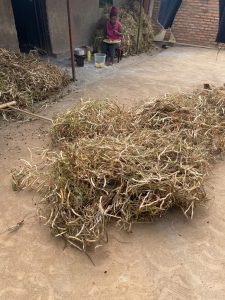
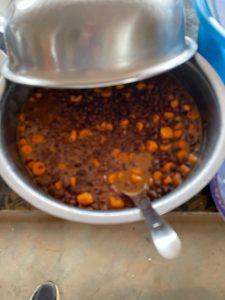
Rwandans love beans. I eat them just about every day for lunch at school. Before coming here, I never ate this kind of bean. During training, when my colleague John said that he ate beans and rice every day at his teacher training college, I didn’t believe him. I do now. The Rwandans pull the bean plants from the field and pile them high. Then they thrash them with whatever implement is around to separate the beans from the pod. Then they separate the beans again. I’m not sure why, but perhaps to save some for seed. It’s a very time consuming process but they do it in groups, so that makes it fun. Today we had beans mixed with carrots for lunch, but usually “doh-doh” (a slightly bitter green, like spinach) is mixed in.
Jun 22, 2023
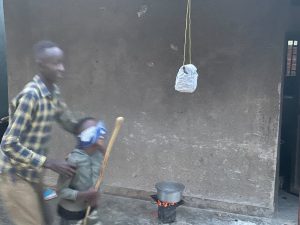
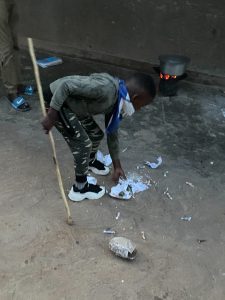
I told Melvin that I had a surprise for him. I told him I was going to put candy in a bag, hang it from the clothesline, and he could hit the bag with a stick while blindfolded. “Like a pinata?” said this super-smart 7-year-old. I have no idea where he learned the word. Emmanuel, his older brother’s buddy and the kid who cleans my house, blindfolded Manzi and then spun him around clockwise and counterclockwise a bunch of times. Manzi, true to form, instead of being dizzy, cracked the bag open on his first try. He really wasn’t clear on what to do next, so I had to pick up the candy and give it to him and others gathered around. I hope to do another pinata with my students at the TTC on Saturday, but my paper mache skills could use a little help so I’ll probably just put the candy in a paper bag.
Jun 20, 2023
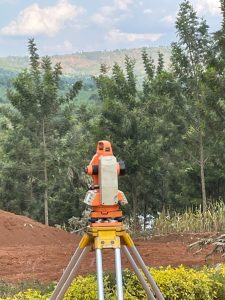
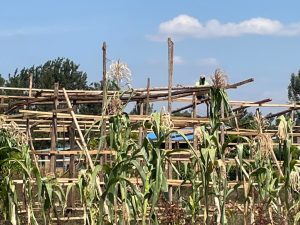
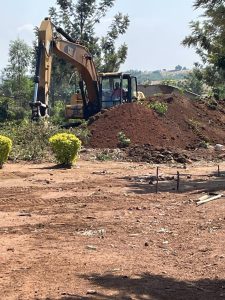
As our school year wraps up, construction has already begun on buildings that will be in place for the opening of the next school year in September. Going, going, gone are fields of corn, beans, cabbage and peppers that dotted our campus. Right now, the staff room for teachers shares a roof with the principal’s office and secretary’s office, the dean of students and dean of discipline’s office, the library, the bursar’s office, and faculty/staff bathrooms, so growth is definitely needed. I’m not sure if they are building additional dorms. TTC Kabarore is a residential college, so even if the students are from Kabarore, they must dorm at the school. My two cents is that if they let “commuter” students (those who live within a half-hour walk of the school) go home every day instead of forcing them to stay, there would be a lot more room on campus and shorter lines in the dining hall.
Jun 18, 2023
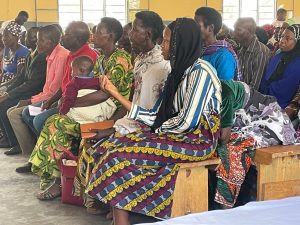
Sometimes I have to work on Sunday. Today was Parents’ Day at TTC Kabarore and about 250 parents showed up for the event. The school said that the meeting would start at 9 a.m., but I knew better, so I got there at 9:45 which was in plenty of time. We all met in the dining hall where the principal, dean of students, dean of discipline, the bursar and two representatives of the parents’ council addressed the parents. One of the things on the agenda was the new school uniform for next year, which includes a necktie for boys (not a great idea in my opinion, as the school day is too long to have to wear a tie all day). We also had beautiful singing by a student gospel choir and a mini-theater. The moral of the skit was of the evils of social media and the bad guy was carried out of the dining hall by the police. We processed out of the dining hall and then the parents had time to visit with their kids on the school lawn. I introduced myself to several parents, but was not feeling well, so I excused myself and went home a little after 2 p.m.

Jun 17, 2023
Surprisingly, Rwandans celebrate Mother’s Day on the same day as we do in the U.S., so I’m assuming that tomorrow is Father’s Day. I say surprisingly because these holidays are celebrated on different days in Thailand (August 12 – Queen Sirikit’s birthday and December 5 – the late King Bhumipol’s birthday), so I assumed each country would choose a suitable date for their own celebrations. Anyhoo, my sister, an ace family researcher, recently sent along this photo of my father at age 17. It might be earliest photo I’ve seen of him. He is working on a boat on the River Shannon (we guess) loading fish to be sent to England (we guess). His brother Tommy (we guess) is in the photo with him along with someone else. Happy Fathers’ Day!
1937 – John Hartigan age 17 and who else – in Limerick Docks by S. Flynn Limerick
Jun 12, 2023
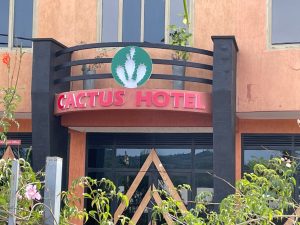
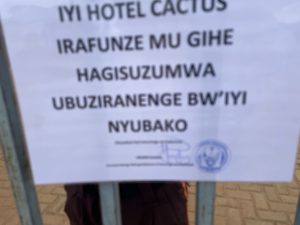
Peace Corps life isn’t posh, but I did have one perk in my little town – the Cactus Hotel. I had a good meal there about every other day and the staff was friendly. However, it has been closed for several weeks. I’m not sure of the reason. People have said that its reopening is imminent, but the security guard there today said that it will be two months before it opens again. This is not good for someone who doesn’t cook at site. Now, I’m forced to eat cornflakes and eat peanut butter on toast to get by. There are a couple of other restaurants in town, but nothing like the Cactus. Today I went to the East End Hotel, which has a gorgeous view of the Kabarore valley and surrounding mountains, but I have to walk my bike up a steep hill to get there and the food just isn’t up to the level of the Cactus.
Jun 11, 2023
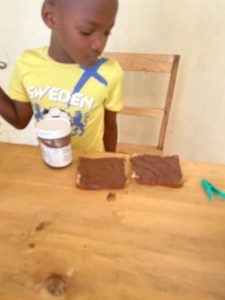
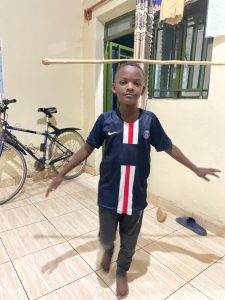
My landlord’s son, Manzi (Melvin), had missed some school lately with some sort of illness and was definitely not himself. He’s back in top form now. This morning when I returned from mass, he was there to help himself to a Nutella sandwich (he puts the spread on both slices). He also came back this evening for a second helping. I can’t say that I blame him as Rwandans eat dinner very late. He’s happier now that his mother has returned to Rwanda. She’s a police officer/peacekeeper who had been working in the Central African Republic. She did her service there through the African Union. Manzi said that he loves his mother more than chocolate sandwiches, which says a lot seeing how much he loves those sandwiches. Here’s another photo of him balancing a walking cane on his head, which shows he’s back to his usual 7-year-old antics.
Jun 10, 2023
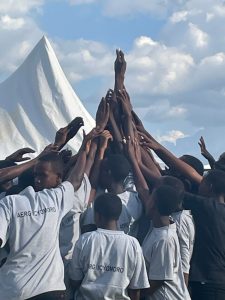
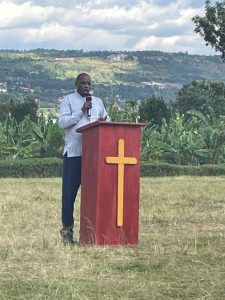
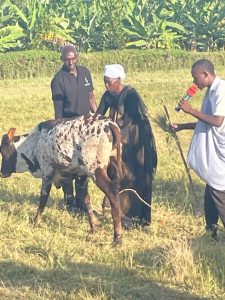
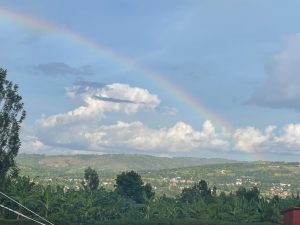
Rwanda marks the beginning of the Genocide Against the Tutsis each year in early April. Since students are on break at that time, the Rwandan government asks schools to hold a commemoration at some point in the following months. It was our turn yesterday. High school and upper primary students from around Kabarore gathered at Bahinga Government School to commemorate the genocide. It was a moving event. There were many speeches by government officials and an Anglican bishop, somber singing and dancing by the students, lighting of candles, and at the end of the ceremony, one woman, a survivor of the 1994 genocide, was given a cow. (In Rwanda, that’s a very valuable gift.) Amazingly, a rainbow appeared during the ceremony despite no rain. While it was a long week and I wasn’t excited to go to the ceremony, it was unbelievably moving and I’m glad I went.

Jun 8, 2023
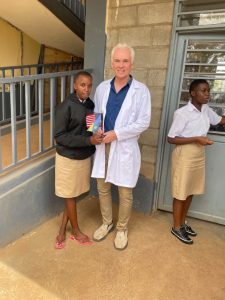
Some of the students at Kabarore Teacher Training College are refugees from Congo. This is 11th grader Herene who left TTC Kabarore yesterday to return to the refugee camp to get ready to join her father in Kentucky next week. Her journey prompted a lot of discussion in the staff room about refugees in the U.S. A Zimbabwean tutor said that he would like her to continue her education, but I told her it’s more likely that she’ll work and get a high school equivalency diploma. I explained that refugees have to reimburse the U.S. government for the air ticket within 6 months of settling in the U.S. I also pointed out that state education laws differ; if Herene was in New York State, she could continue her education until the year she turned 22, but I’m not sure about Kentucky.
Herene is a great kid and will do fine in the U.S. I gave her the U.S. and Rwandan flags from my bicycle as a going-away present. Good luck, Herene!
Jun 4, 2023
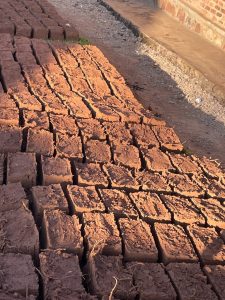
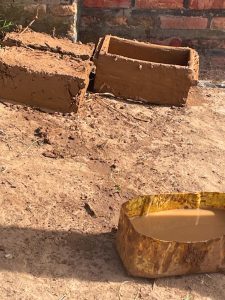
Here’s today’s slice of life in Kabarore…While there is rain in the forecast for this week, the seasons have changed and it is now the long dry season. Whoever made this pile of bricks waited until the end of the rainy season. Now the sunny and dry weather can harden the bricks. While some houses and buildings are made of oven-fired bricks or cinder blocks, most houses in rural Rwanda are constructed with mud bricks like these, a perfect natural building material. I asked someone if clay is used in the bricks, and he said no, so it appears that they are just mud, dirt, water and discarded parts of plants mixed in to hold the bricks together. The purposes for these bricks are many and perhaps they will be used to build a latrine. Most rural Rwandans use latrines – a hole in the ground with a small mud brick structure built around it for privacy. Luckily, I have an indoor bathroom.