Apr 9, 2023
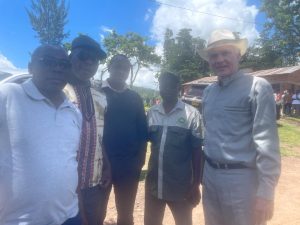
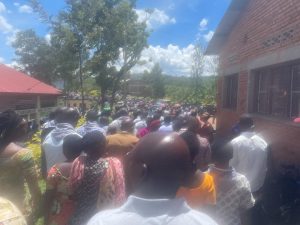
Friday, April 7 marked “Kwibuka 29” or the 29th anniversary of the start of the genocide against the Tutsi. Along with the principal of my teacher training college and three colleagues from Zimbabwe, I attended a commemoration ceremony in the village of Cyabusheshe, about 20 km from Kabarore. It was a solemn ceremony with many people in attendance and several speakers. Rwandan president Paul Kagame spoke in English via broadcast. He gave a stirring speech, talking about many nations (including the U.S.A.) turned their backs on Rwanda in their time of need. He also said that if you behave kindly to others, you will always be in the right. The Genocide against the Tutsi was a terrible event but the Rwandans do an excellent job of addressing this ugly part of history, reconciling with their neighbors and building a better country from it.
Mar 30, 2023
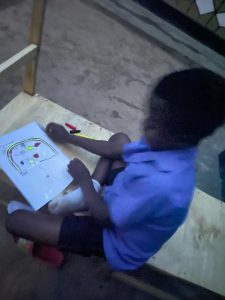
Readers of this blog clearly want to hear more about Manzi, a.k.a. Melvin, my landlord’s 7-year-old son. He is always up to something. A while back when I was grading tests in the courtyard at the end of the day, he spied my red Sharpie and he thought he should do some drawing with it. Manzi commandeered that Sharpie, ending my grading, and also took my black Sharpie and a neon yellow highlighter. He then took my chair and added another to serve as his desk. He drew a picture with a rainbow, a house, a couple of fish, a basket and some other things. When the light faded, he came into my house to continue his artwork. He was joined by Emmanuel, the teenager who cleans my house, who ripped off a flap of the box my toaster came in for his canvas. Then the electricity went out in the neighborhood, but that didn’t stop either of them. They turned on my bicycle light and continued drawing their pictures.

Mar 29, 2023
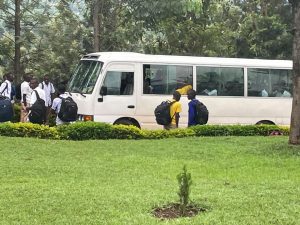
Term 2 is officially over. The grades are in the books and now the students must return home until Monday, April 17. I’m sure they are all looking forward to the break and some home cooking. For the students who cannot walk or take a motorcycle taxi home, which is most of the 500+ students, the school rents buses for them. Here are a group of students who are heading to Rwagatima, about 10 km away. Since the bus only holds about 30 people, another bus pulled up shortly after to take the rest of the students to Rwagatima. The students take only their backpacks and leave everything else behind in the dormitories. See you soon!
Mar 26, 2023
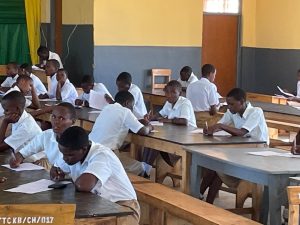
Exam proctoring, or ‘invigilation’ as its called in Rwanda, is one of the duties of each tutor. Sometimes boring, sometimes challenging, it’s part of the job and it has to be done. Usually, a tutor is assigned to a single classroom, but the number of students necessitates also using the dining hall. My colleague Onias, a tutor from Zimbabwe, and I had to invigilate exams in the dining hall. That means that there are two of use and 130+ students. That keeps us hopping. For the afternoon session, we devised a plan to place the exams down before allowing the students in to properly space them. That seemed to work. Here is a picture of the students at taking exams.
Mar 22, 2023
One of the end of term duties you have do is “floating invigilation.” This means that you have to sit in a central location and be ready to step into any one of six classrooms if the teacher needs to leave the room for any reason. I was doing floating invigilation the other day and at the end of the day, most students are finished with exams so they want to have fun. This group of Year 3 (HS seniors) led by Ms. Clementine came by to chat and to snap a few photos with me, which were then emailed to her. These are really precious times as you get to learn a little bit about the students’ lives which you don’t really have time to do in the classroom.

Mar 21, 2023
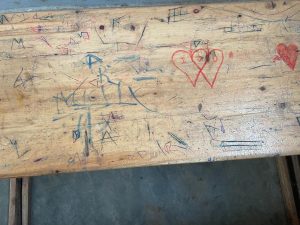
For as long as students have been sitting at wooden desks, they’ve been etching their names and drawing on them. Here’s a typical desk in one of the classrooms I was proctoring in recently.
Mar 20, 2023
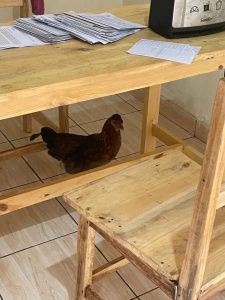
Feathered visitors often come in my door when I leave it open. (For some reason, “The chicken is in the kitchen” was a difficult sentence for my Thai students to say; not sure if it poses a problem for my Rwandan students.) The chickens in the landlord’s courtyard like my house for some reason. This gal got in my house when I was in another room so I had to chase her out. My landlord, Jean Nepo, like a lot of Rwandans, raises a few chickens to sell. My principal is also has chickens. He’d like to do a project where we build a chicken coop at school so we get the eggs to add to the students’ food, thereby increasing their protein intake. Good idea!
Mar 15, 2023
Baby naming ceremonies are a big deal in Rwanda. My colleague Rachel and her husband Sylvester (standing on either side of the baby in the photo) had a party to celebrate the birth of their daughter, Ineza (middle name which I forgot) Briere, in November. There were prayers, speeches and a feast for relatives, neighbors and friends to welcome the little girl to the community. Tutors from Rwanda, Zimbabwe, Senegal and me from the US were there. A very nice time was had by all.

Mar 10, 2023
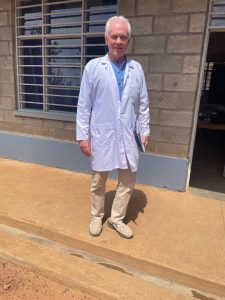
There seems to be a lot of influence from the British educational system in Rwanda, which is, I suppose, where we get this teaching coat, or “itaboriya” in Kinyarwanda. All of the Rwandan and Zimbabwean tutors (again, the British influence) wear them, but the volunteer from Senegal and I do not. The jackets are numbered 1-20 or so and are stamped ‘TTC Kabarore.’ The tutors take great pride in wearing them. However, I finally got so sick of having my clothes covered in chalk dust, so I broke down and spent the $12 to have my tailor Paul make one for me. Here’s me in my jacket in front of the staff room at our school.
Mar 6, 2023
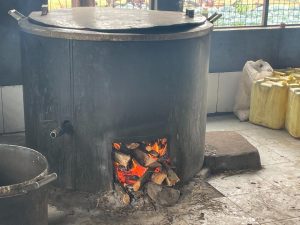
Our teacher training college prepares and serves a lot of food. The 500+ students get breakfast, which I understand is porridge, the 40 or so tutors (teachers), administration and staff get a tea break mid-morning, everyone gets lunch at the school and the students get dinner. That’s a lot of work! The kitchen staff cook the food by using these large pots which are heated by wood. This is not a sustainable way of cooking as the school does not own a woodlot and wood is expensive.